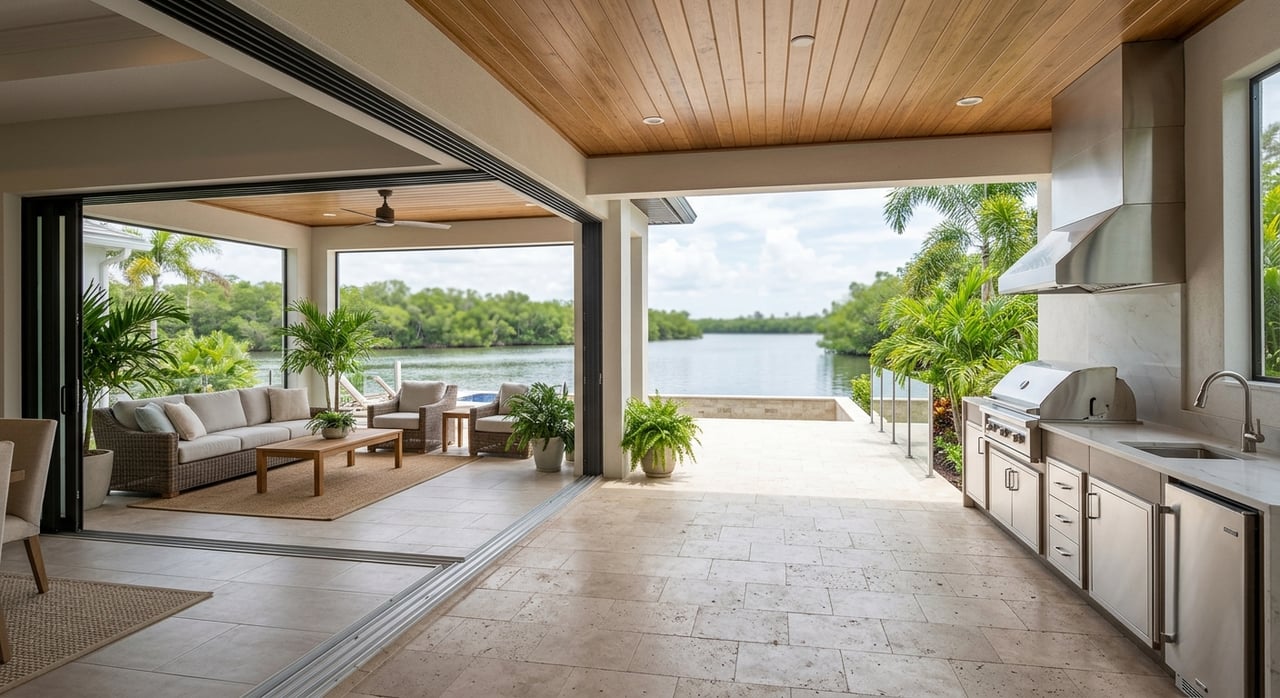
Are you shopping for a waterfront home on Manasota Key and wondering what actually matters beyond the view? That is a smart question, because two homes can look equally beautiful online while offering very different boating access, storm resilience, maintenance needs, and long-term usability. If you know which features to study first, you can make a more confident decision and avoid expensive surprises. Let’s dive in.
Why waterfront details matter on Manasota Key
Manasota Key is a barrier-island setting in Charlotte County, and that coastal location shapes how homes are built, maintained, and compared. County rules for the Manasota and Sandpiper Key overlay are designed to preserve open vistas and shoreline buffers, including a rule that no Gulf-front structure may be within 50 feet of the shoreline.
That means waterfront value here is not just about square footage or interior finishes. It is also about how a property fits its site, how it handles exposure to water and storms, and whether key improvements were built and maintained the right way.
Because public access to beaches and Lemon Bay is limited in some areas, private water-related features can carry added lifestyle appeal when you compare homes. Still, the right fit depends on how you plan to use the property, whether that means boating, beach access, low-maintenance ownership, or long-term resale potential.
Start with water access
If you are buying waterfront on Manasota Key, water access is usually the first feature to evaluate. A pretty shoreline does not always mean practical boating use, easy launch conditions, or compliant dock improvements.
Private docks and lifts
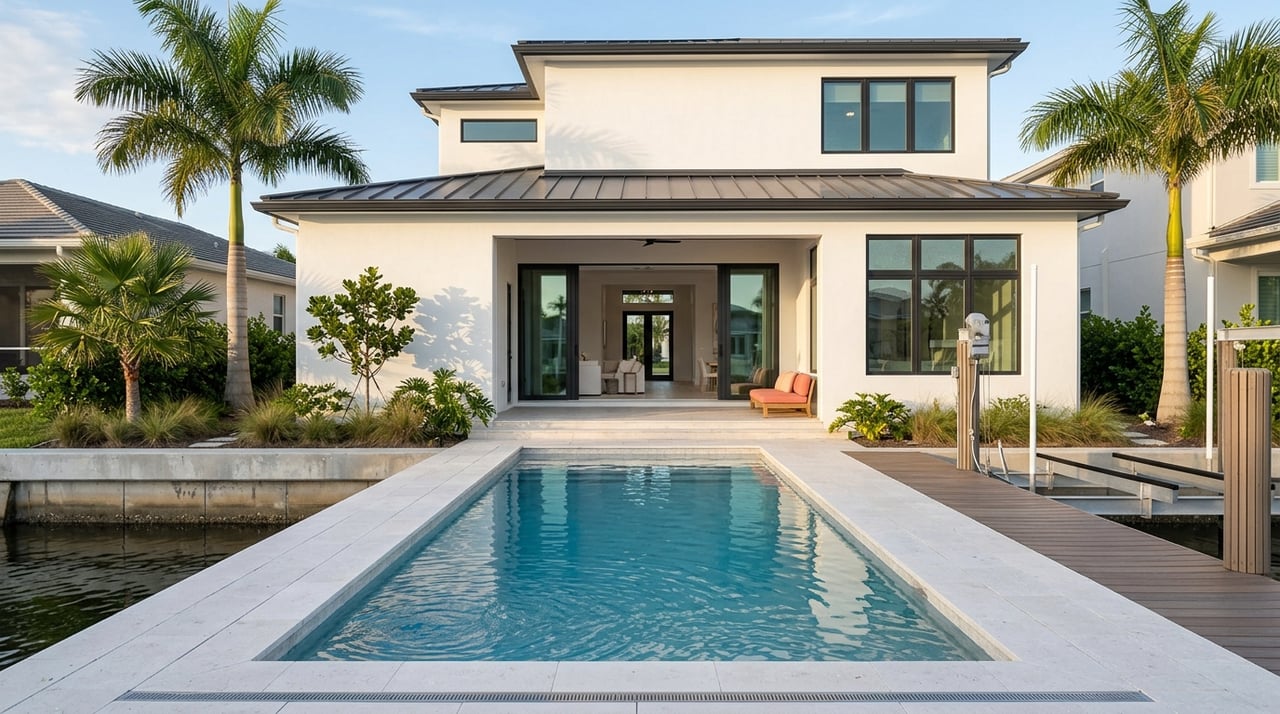
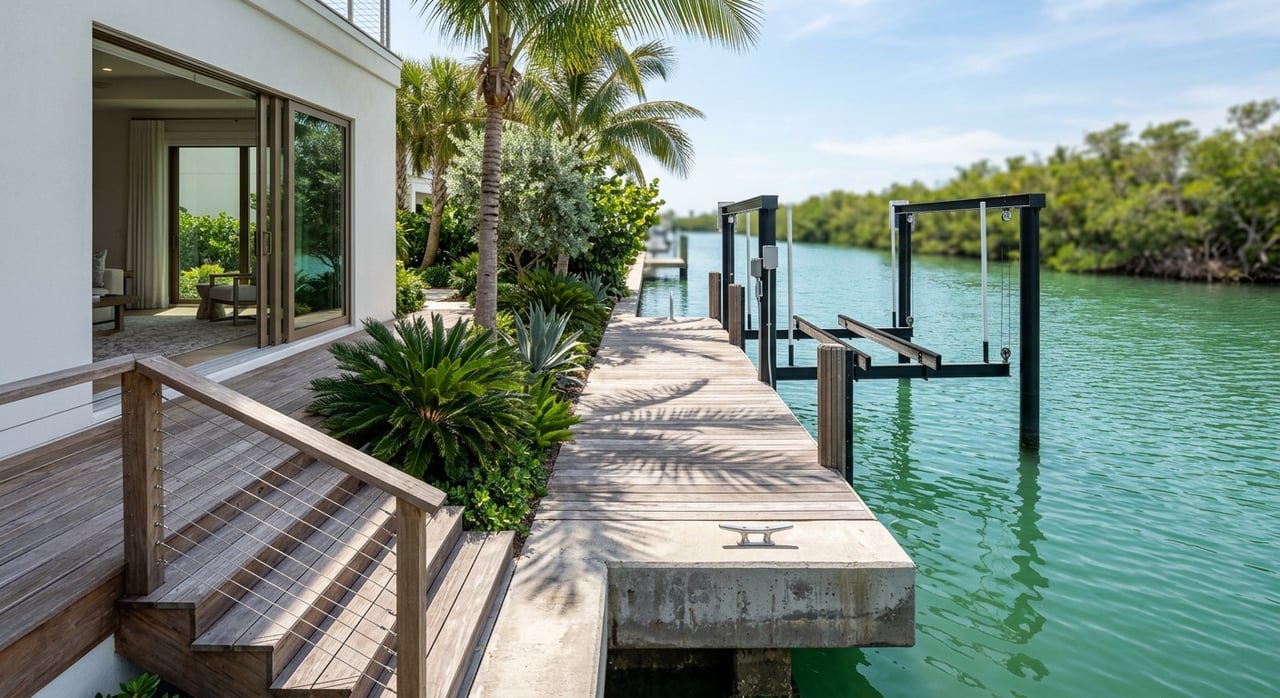
For many buyers, a private dock or boat lift is a major draw. On Manasota Key, though, you should look beyond whether a dock exists and ask whether it was permitted, how it was constructed, and whether the lift and electrical components are in good working order.
Charlotte County requires signed and sealed drawings, a site plan, and outside agency approval for residential dock permits. If electrical work is part of the dock or lift, the county says a licensed electrical contractor must handle it, and unpermitted wiring can fail inspection.
That makes a dock more than a convenience feature. It is also a legal, structural, and maintenance item that deserves the same attention as the house itself.
Seawalls and shoreline protection
A seawall can help protect the shoreline, but it also adds another major component to inspect. Charlotte County requires engineered seawall design information and scaled site plans for seawall permits, and some projects may also require an easement-occupation agreement.
This matters even more because recent hurricanes caused extensive erosion, displaced sand, and damaged dunes and seawalls on Manasota Key. When you tour a property, seawall condition and shoreline stability should be part of your first-round review, not an afterthought.
Flood zone should be a top priority
On Manasota Key, flood risk is one of the most important factors in how you compare homes. Charlotte County identifies Special Flood Hazard Areas that include A and V zones, and V zones are affected by waves over 3 feet.
In those higher-risk coastal zones, homes generally require pilings and piers, and lower levels are often configured for parking, storage, and access. Charlotte County also states that flood insurance is mandatory for federally backed mortgages in these high-risk areas.
Check flood zone before you fall in love
It is easy to get emotionally attached to a home with open water views or beach frontage. Before you do, verify the flood zone, base flood elevation, and whether an elevation certificate is available.
Charlotte County says its Forerunner portal can be used to look up flood zone information, base flood elevation, and elevation certificates. FEMA's Flood Map Service Center is the official source for flood zone, base flood elevation, and floodway information.
Those details can affect financing, insurance, renovation plans, and how comfortable you feel owning the property over time. They can also influence resale appeal when you decide to sell later.
Local flood history adds context
Flood maps tell part of the story, but local history adds useful context. Charlotte County's flood timeline notes Manasota Key flooding during Tropical Storm Gordon and Tropical Storm Harvey, along with beach erosion and homes threatened by high surf during Hurricane Georges.
That history does not mean every property carries the same level of risk. It does mean you should treat elevation, shoreline condition, and storm hardening as core buying criteria.
Coastal construction features matter
A waterfront home on Manasota Key lives in a harsh environment. Salt spray, humidity, wind, and moisture all work against building materials over time.
That is why the best waterfront homes are not only attractive. They are also built and maintained with coastal conditions in mind.
Corrosion-resistant materials
FEMA coastal guidance says corrosion-resistant connectors and fasteners are essential in coastal areas, especially where salt spray and windblown rain are common. The guidance also recommends hot-dip galvanized steel or stainless steel hardware and careful compatibility between pressure-treated wood and fasteners.
For you as a buyer, this means it is worth taking a close look at exposed metal parts throughout the property. Pay special attention to railings, fasteners, dock hardware, lift components, roof-to-wall connections, and exposed utility areas.
Protected openings
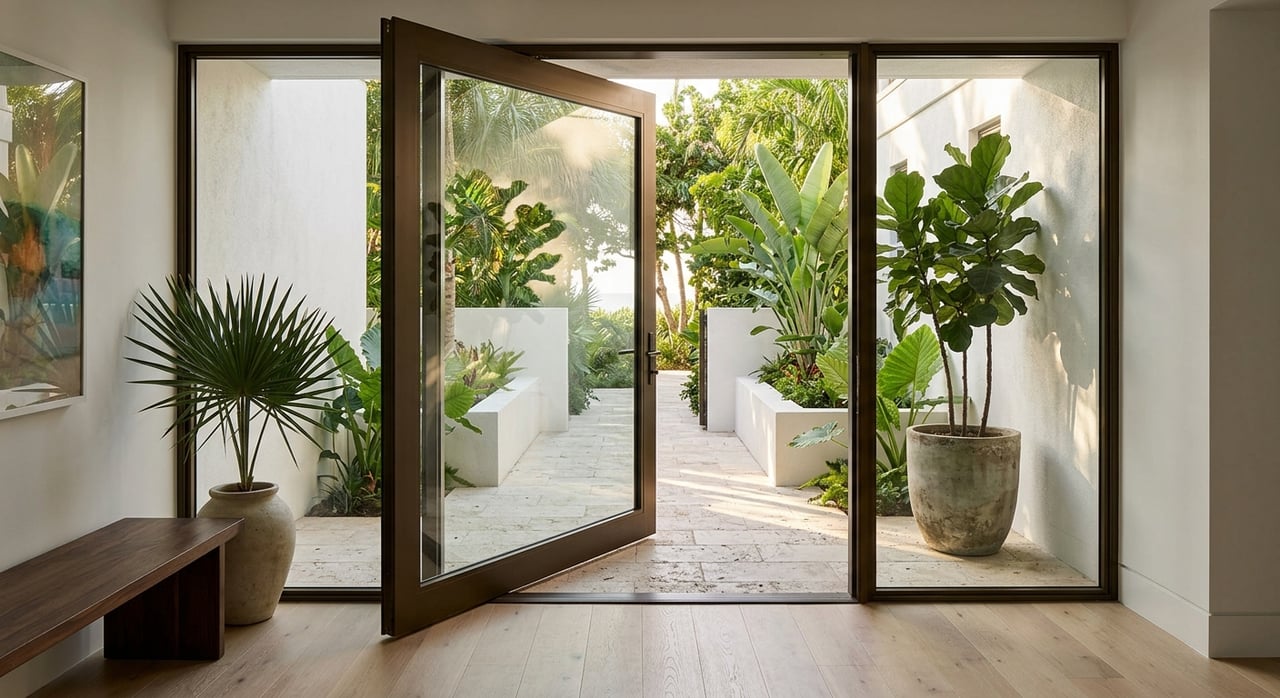
Windows and doors play a big role in coastal performance. Florida Building Code resources state that windows in wind-borne debris regions must be impact resistant or protected.
That does not just affect storm readiness. It can also influence maintenance, insurance considerations, and the overall durability of the home.
Outdoor living should work with the site
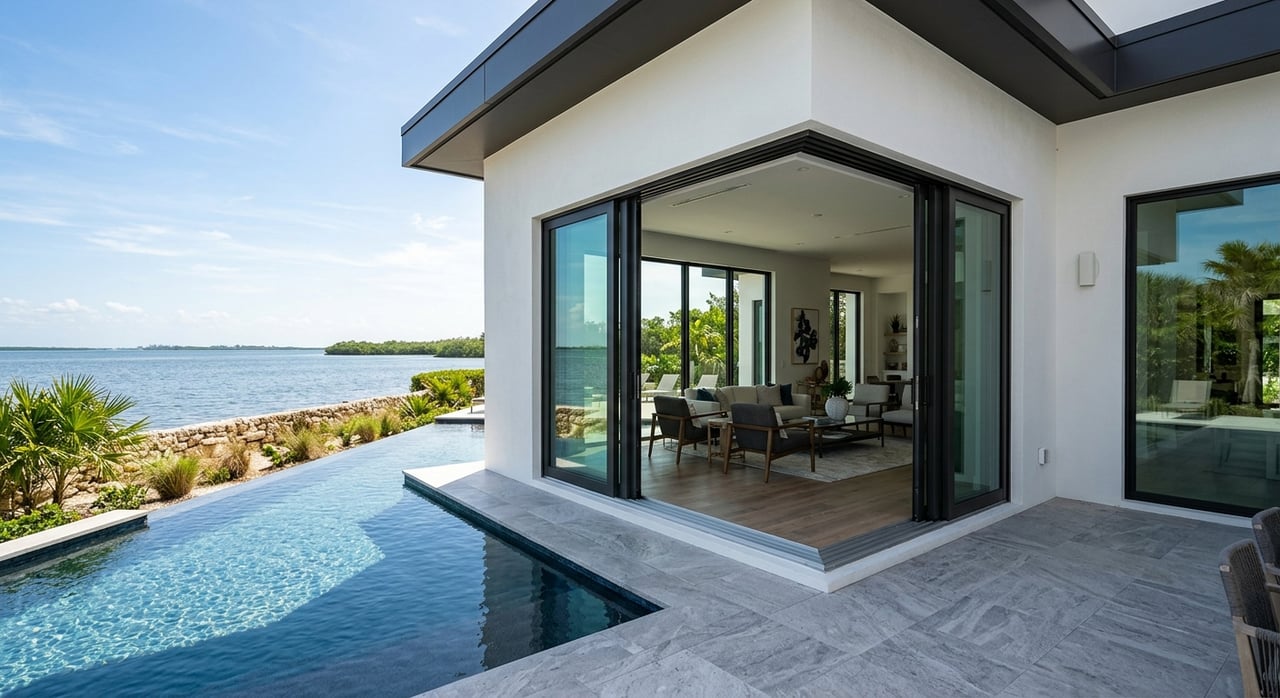
On Manasota Key, outdoor living is a big part of the lifestyle. Lanais, balconies, pools, and water-facing sitting areas often shape how much you enjoy the property day to day.
But outdoor spaces should also be reviewed in light of local rules. The Manasota Key overlay uses stepped setbacks to preserve vistas and reduce conflicts involving roof overhangs, balcony rails, and similar side features.
The overlay also requires screening for some mechanical and pool equipment. So when you compare homes, think about more than size alone. Ask whether the outdoor layout feels functional, private, easy to maintain, and consistent with the site design.
View corridors and usability
A well-designed waterfront home does more than face the water. It makes the most of the lot while respecting shoreline buffers, setbacks, and practical circulation.
That can affect where balconies sit, how a lanai connects to the interior, and whether utilities or equipment interrupt the experience. On a barrier island, smart site planning can make a home feel much more livable.
What to inspect before making an offer
A strong waterfront purchase review should go wider than a standard interior checklist. On Manasota Key, the most important features often sit outside the main living space.
Here is a smart comparison order to keep in mind as you evaluate listings:
- Water access and legal status of the dock, lift, or seawall
- Flood zone, base flood elevation, and elevation certificate
- Shoreline condition, erosion history, and storm hardening
- Corrosion-resistant materials and protected openings
- Outdoor-living layout and fit with overlay setbacks and view rules
This order can help you focus on the items that most affect ownership costs, use, and long-term confidence. A beautiful kitchen is great, but on a coastal property, the waterfront systems often tell the bigger story.
What different buyers may value most
Not every waterfront buyer on Manasota Key wants the same thing. The right home depends on your goals.
If boating is your priority
Look closely at dock legality, lift condition, electrical compliance, and whether the waterfront improvement is tied to a seawall, easement, or other regulated structure. These details can affect both daily convenience and future repairs or upgrades.
If low maintenance is your priority
Focus on corrosion-resistant materials and protected openings. Coastal wear is real, and a home built or updated with durable materials may be easier to own over time.
If resale is your priority
Pay close attention to flood documentation, legal permits, elevation, and site design that preserves views. These factors can influence financing, usability, and buyer appeal when the time comes to sell.
Why local guidance matters
Manasota Key is not a market where you want to rely on broad assumptions about waterfront homes. Development rules, flood exposure, shoreline conditions, and permitting can vary meaningfully from one property to the next.
Charlotte County also announced a regulatory update in May 2026 that added flood-resilience measures, revised building-height calculations, and encouraged voluntary freeboard. That is another reminder that coastal ownership here is shaped by local rules as much as lifestyle.
When you understand the difference between a scenic waterfront home and a well-positioned waterfront home, you can buy with more clarity. That is especially important on a barrier island where views, access, maintenance, and resilience all come together.
If you are comparing waterfront homes on Manasota Key and want help sorting through docks, flood zones, seawalls, and coastal value, The Flamingo Group can help you evaluate the details that matter most.
FAQs
What waterfront feature matters most on Manasota Key?
- The right answer depends on your goals, but many buyers start with water access, dock or seawall legal status, and flood zone because those items strongly affect usability and ownership costs.
What should you check about a dock on Manasota Key?
- You should review permitting, site plans, lift condition, and electrical compliance, since Charlotte County requires specific approvals and licensed electrical work for dock-related electrical installations.
Why is flood zone important for Manasota Key homes?
- Flood zone can affect how a home is built, whether flood insurance is required for certain loans, and how you assess long-term risk, financing, and resale.
What signs of coastal wear should you look for in a Manasota Key waterfront home?
- Look for corrosion on railings, fasteners, dock hardware, lift parts, exposed utilities, and other metal components that face salt spray, moisture, and wind.
How do local rules affect outdoor spaces on Manasota Key?
- Charlotte County's overlay uses stepped setbacks, shoreline buffers, and some equipment-screening requirements, which can influence balcony placement, lanai design, and overall site layout.
What documents should you review before buying a waterfront home on Manasota Key?
- A careful review should include flood zone information, base flood elevation, elevation certificates if available, survey details, easement status, and permits for waterfront improvements like docks and seawalls.